
Australia’s next major electrical infrastructure boom may already be underway. And it’s being driven by something most electricians will never physically install: artificial intelligence.
AI, cloud computing and digital services all depend on enormous data centres operating 24 hours a day. These facilities consume huge amounts of power, and Australia is preparing for a rapid increase in demand.
AEMO forecasts data centres could account for around 13% of electricity supplied through the National Electricity Market by 2035–36, up from roughly 3% today.
That is a massive shift.
For Australia’s electrical industry, it means one thing: There is going to be a lot of electrical infrastructure to build!
Data centres are really power projects
Take away the server racks and a modern data centre is essentially a highly sophisticated electrical infrastructure project.
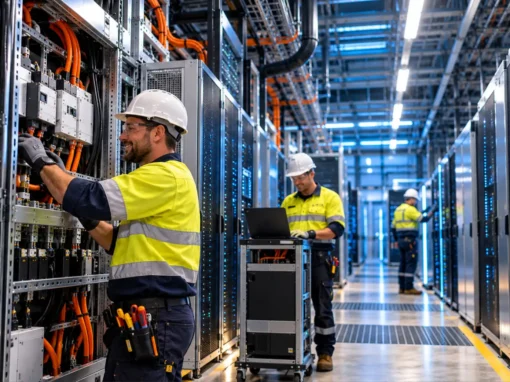
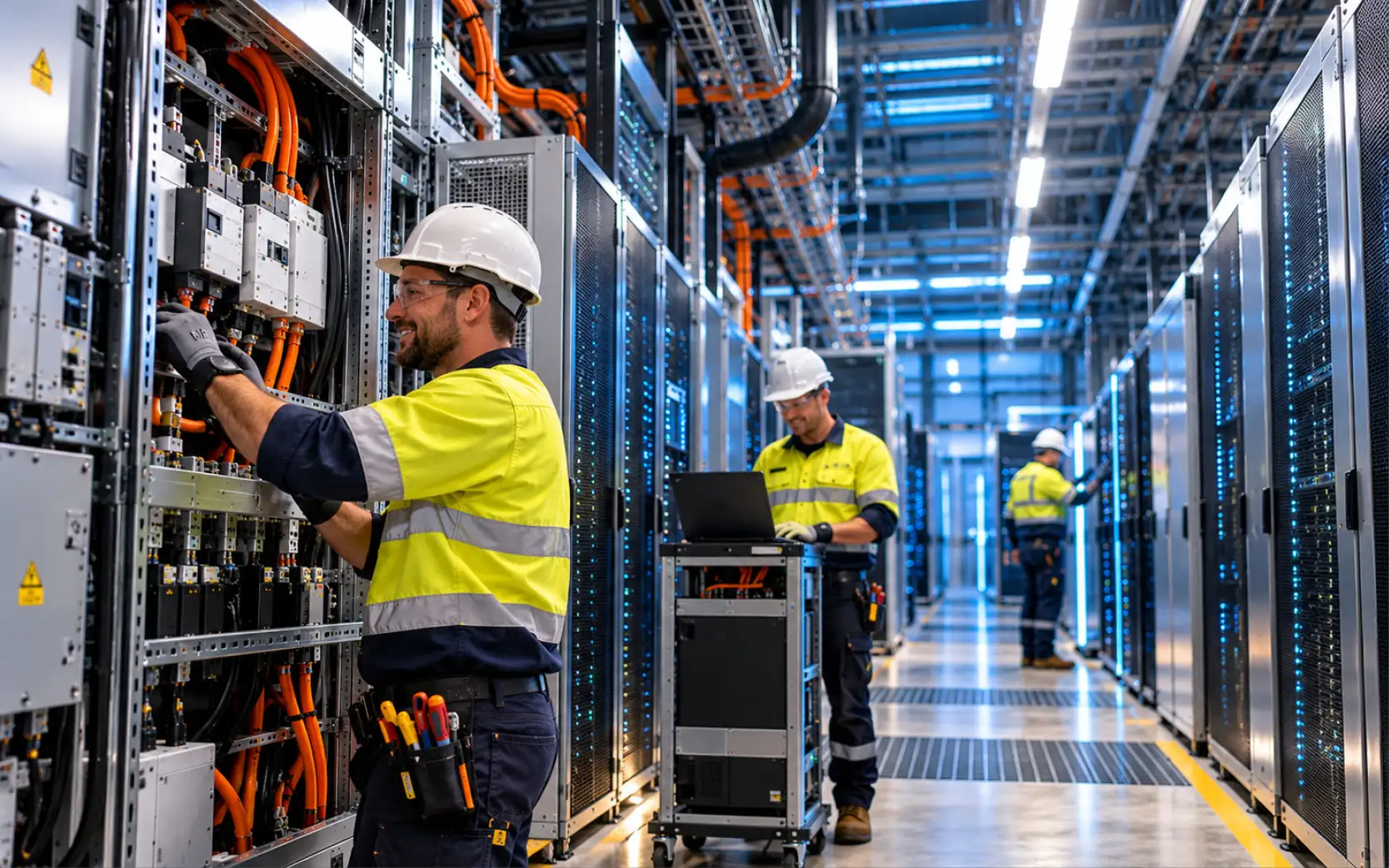
Behind the computing equipment sits a huge amount of electrical gear: transformers, HV infrastructure, switchboards, generators, UPS systems, batteries, metering, protection, controls, communications and cooling.
And unlike a typical commercial building, a data centre cannot simply tolerate an outage. Power quality, redundancy and uptime are everything. That means systems are often designed around dual supplies, backup generation, UPS protection, battery autonomy and N+1 or greater redundancy.
For contractors, that creates a very different kind of opportunity.
You don’t need to build the whole data centre
Most electrical contractors are unlikely to win a headline hyperscale data centre project.
But that doesn’t mean the opportunity isn’t relevant.
In fact, some of the most significant work may happen around the edges:
- Switchboards need to be manufactured.
- Substations need to be upgraded.
- New feeders need to be installed.
- Power quality needs to be monitored.
- Backup systems need to be tested.
And once the facility is operational, all of that infrastructure needs ongoing servicing, testing and maintenance.
Then there is the wider network.
A single large data centre can require tens or even hundreds of megawatts of electricity. That demand can trigger new generation, new substations, network upgrades, battery storage and transmission investment.
So the electrical opportunity extends far beyond the data centre fence. The contractors who understand integration will have an edge.
This is where the industry is changing. Modern electrical systems are becoming increasingly connected. Power, communications, metering, controls, batteries, solar, load management and building systems are no longer separate disciplines. They are becoming part of the same operating environment.
That does not mean electricians need to become software engineers. But understanding how electrical infrastructure communicates, how loads are managed and how systems are monitored remotely will become increasingly valuable.
The contractor who can install the equipment is useful. The contractor who understands how the whole system works together is more valuable.
Then there’s the labour problem
Australia is already short of skilled electricians. Renewables, mining, construction, defence and infrastructure all need them.
Now data centres have entered the race.
For electrical businesses, that means training apprentices, retaining experienced staff and developing specialist skills. The competition for good people is only going to increase.
So where is the opportunity?
For electrical contractors, the data centre boom is not just about working inside a data centre. It is about the infrastructure required to support them, such as:
- HV works.
- Backup generation.
- UPS systems.
- Battery storage.
- Or the network upgrades needed to supply the whole thing.
And with data centre demand now being discussed in hundreds of megawatts and gigawatts, the amount of electrical work flowing from this sector could be enormous.
AI might be getting the headlines, but someone still has to power it.
And that is where the electrical industry comes in.